

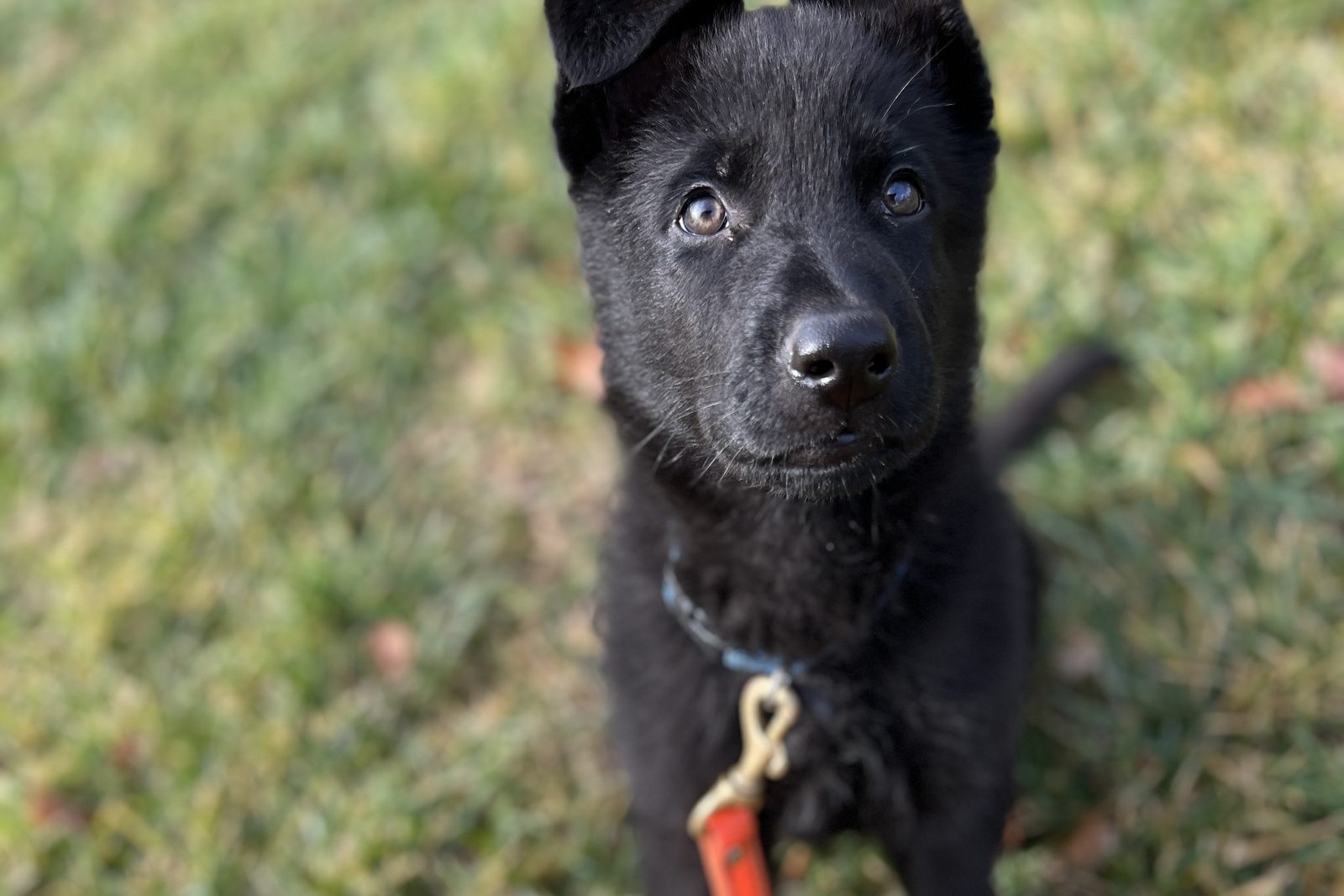
Short answer: Puppy recall training works best when you stop using your voice and start using a whistle. Condition the whistle by blowing it and immediately feeding your puppy — 20 to 30 times per session, no strings attached — until the sound alone makes their head snap around. Then build distance on a long line, then add distractions, one at a time. In our program, most puppies have a solid recall in about six weeks starting at eight weeks old.
Let’s start with the part nobody says out loud: if your puppy ignores you when you call, you didn’t fail. You just used the one cue that’s almost impossible to keep clean — your own voice.
Recall is the trained behavior of a dog returning to their handler immediately on a specific signal, regardless of what else is happening. Not “eventually.” Not “after they finish sniffing that.” Immediately. And the fastest, most reliable way we’ve found to build it in a puppy is a whistle — the same conditioning approach used to call a six-ton killer whale back across a pool with no leash, no collar, and no way to make her do anything she doesn’t want to do.
That’s not a marketing line. That’s just the job. When you can’t force an animal, you get very good at making the right choice the easy choice. This guide is that method, scaled down for the puppy currently chewing your rug.
What’s in this guide
- What is puppy recall training?
- Why won’t my puppy come when I call?
- Why does a whistle work better than your voice?
- What kind of whistle should you use for puppy recall?
- How do you charge the whistle so your puppy loves it?
- What whistle pattern should you use for recall?
- How do you add distance to your puppy’s recall?
- How do you proof the recall against distractions?
- How long does it take to train a reliable puppy recall?
- How do you fade the treats without losing the recall?
- Why did my puppy’s recall suddenly get worse?
- The 8 mistakes that break a puppy’s recall
- Can you fix a “come” cue your dog already ignores?
- When can your puppy go off leash?
- Frequently asked questions
What is puppy recall training?
Puppy recall training is the process of conditioning a puppy to return to you the instant they hear a specific signal, no matter the distraction. It has two parts most people collapse into one: the cue (the signal that means “come here now”) and the consequence (what happens when they arrive). Get either one wrong and the behavior falls apart under pressure.
Here’s the distinction that matters, and it’s one that gets collapsed constantly. At SeaWorld, the whistle is a bridge — a marker that tells the animal “that exact thing you just did earns you a reward.” For recall work with a puppy, we use the whistle differently. It’s a cue: a discriminative stimulus that means “come to me.” Your marker stays separate — a word like “yes,” delivered the moment your puppy commits to you.
Two jobs, two signals. Either device can do either job — what matters is that you never make one do both.
And recall isn’t obedience. Obedience is a dog choosing to comply. A well-conditioned recall is closer to automatic than to a decision — the sound goes in, the dog turns and moves, and the thinking happens on the way. You want the response to be faster than the deliberation.
Why won’t my puppy come when I call?
Nine times out of ten it’s not stubbornness. It’s one of four things, and all four are fixable.
- The word is worn out. You’ve said “come” a few hundred times in a few hundred contexts — some good, some not. It’s become background noise.
- Coming has a bad history. You called them to end play, to get in the crate, to have their nails clipped, to get a bath. Your puppy is not defiant. Your puppy is doing math.
- You called when you couldn’t back it up. Every ignored call teaches your puppy the cue is optional. Repetition doesn’t build the behavior — it builds the habit of ignoring it.
- The competition is better than you. A squirrel is a full sensory experience. You’re a person holding a piece of kibble. Sometimes the squirrel just wins.
Notice what’s not on that list: your puppy being bad, dominant, or “not that smart.” Behavior follows consequences. Change the consequences, change the behavior.
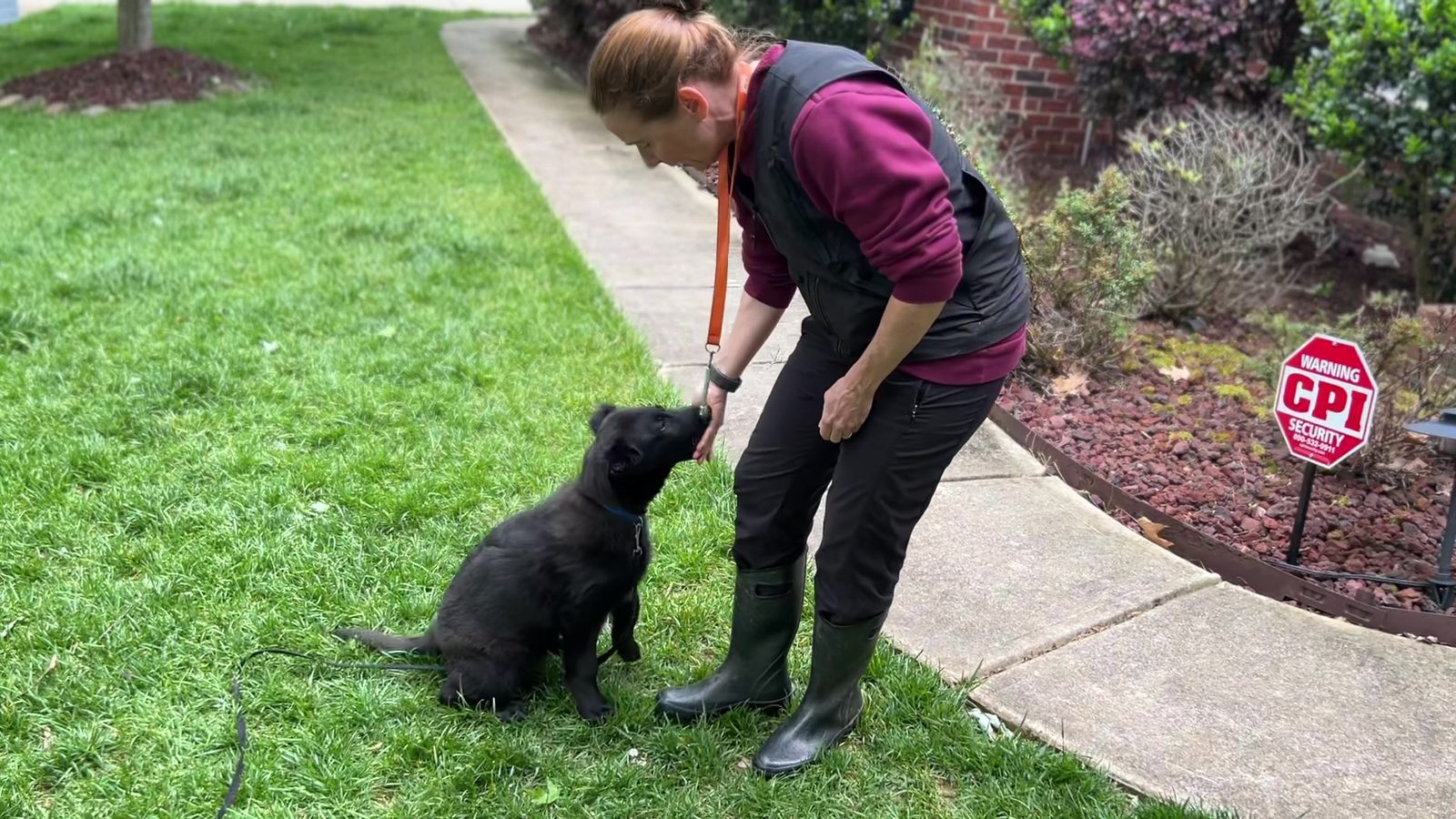
Why does a whistle work better than your voice?
A whistle beats your voice for four specific reasons, and every one of them is mechanical rather than magical.
- It sounds identical every time. Your voice on a calm Tuesday and your voice when your puppy is heading toward a road are two different sounds. Your puppy hears the difference — and the frustrated version is the one they’ve learned to avoid.
- It carries. A whistle cuts through wind, traffic, other dogs, and distance in a way shouting never will.
- It’s a clean slate. Your puppy has no history with a whistle. No ignored calls, no bath, no nail trim. You get to build the association from zero and keep it perfect.
- Anyone can deliver it. Your spouse, your kids, the dog walker — the signal is exactly the same coming from all of them. Try that with a voice cue.
Dogs also hear far above our range — up to roughly 45,000 Hz, compared to about 20,000 Hz for us, according to the American Kennel Club. That’s a nice fact, but it isn’t why the whistle works. The whistle works because it’s consistent. Consistency is the whole ballgame.
What kind of whistle should you use for puppy recall?
Use a pealess plastic dog whistle with a fixed pitch. The classic gundog whistles are pealess, weatherproof, cheap, and produce the same tone every time. The two most common are the Acme 210.5 and the Acme 211.5 — for recall, start with the 211.5. It’s slightly lower and carries much farther, which is what you need once your puppy is 50 feet out in an open field.
Three things to avoid:
- Silent or “ultrasonic” whistles. If you can’t hear your own cue, you can’t tell whether you delivered it consistently. You’re training blind.
- Pea whistles (the referee kind). The pea makes the tone wobble, and it can clog or jam when wet — pealess models exist specifically to avoid that.
- Adjustable-pitch whistles. The pitch drifts. Your puppy learned one sound — give them that sound.
Buy two. One on a lanyard you wear every session, one in the car or by the back door. A recall cue you left in the kitchen isn’t a recall cue.
And pick a comfortable, repeatable volume, then stay there. You’re not trying to be loud. You’re trying to be the same.
How do you charge the whistle so your puppy loves it?
Charging the whistle is pure classical conditioning — you’re building an involuntary association before you ever ask for a behavior. The whistle predicts food. That’s the entire lesson for the first two weeks.
The six-step charging session:
- Take your puppy somewhere boring and quiet. A hallway. The kitchen. Nothing interesting happening.
- Get 20–30 pieces of your puppy’s actual meal into your hand. Use their food — you’ll be doing this a lot.
- Blow the whistle once, at your chosen pattern.
- Feed immediately. Sound first, food second, within about a half second. The order is not negotiable.
- Wait a few seconds. Repeat. Do not ask for anything — no sit, no eye contact, no coming to you. Whistle, food.
- Stop at 20–30 reps or two minutes, whichever comes first. End while your puppy still wants more.
Do this two or three times a day for two weeks. Within the first few days you’ll blow the whistle and your puppy’s head will whip around before their brain catches up — that head snap is what you’re paying for. Keep charging anyway. The second week of pure, no-strings pairing is what makes the cue hold up later under distraction. Almost every whistle recall problem we see two months in traces back to a whistle that was never properly charged.
What whistle pattern should you use for recall?
Use multiple short pips for recall and one long blast for stop or sit. That’s the working convention among gundog trainers, and it’s convention for a good reason: the two patterns sound nothing alike, so your dog can never confuse them at distance.
| Pattern | Meaning | When you use it |
|---|---|---|
| Three to five short pips (pip-pip-pip) | Come to me now | Every recall, every session |
| One long blast (2–3 seconds) | Stop and sit where you are | Advanced. Add only after recall is solid |
| A long, continuous trill (or 8–10 rapid pips) | Emergency recall | Reserved for real emergencies. Practiced, never used casually |
The specific pattern matters far less than never changing it. Pick yours today, write it on a sticky note on the fridge, and make sure everyone in the house blows the same thing.
The emergency recall is worth building separately, and its signal has to sound like nothing else you use. A trill or a rapid burst of pips can’t be mistaken for the single long “stop” blast, which matters enormously in the one moment it counts — a dog who mishears and sits instead of running to you is the exact failure you’re insuring against.
It gets its own reward tier too — steak, chicken, the good stuff your puppy never otherwise sees. Practice it once or twice a week, always paid at the top, and never spend it on anything ordinary. You’re keeping it loaded.
How do you add distance to your puppy’s recall?
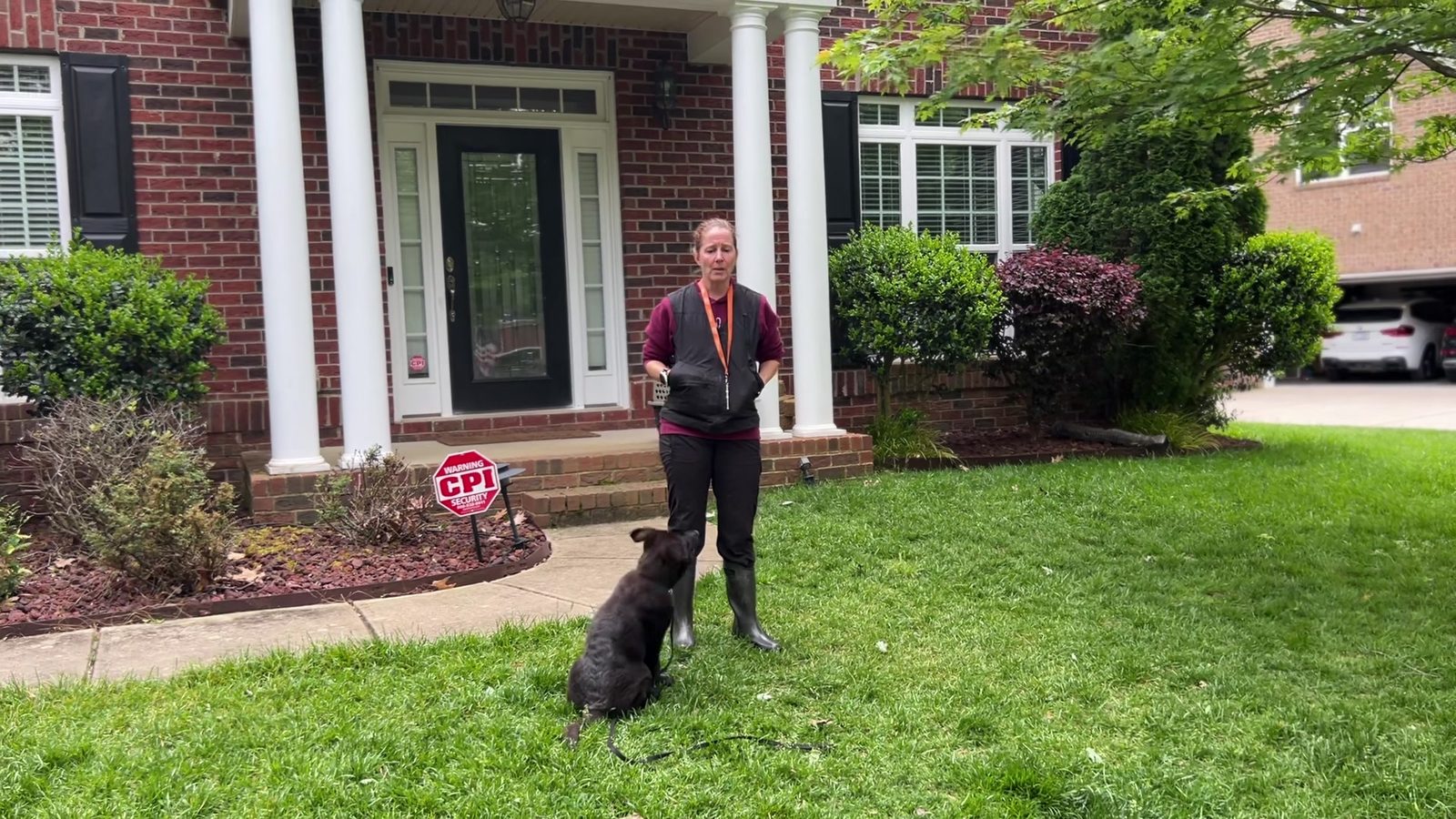
You add distance in small increments, on a long line, and you only move up when your puppy is succeeding almost every time. The number we work to is eight out of ten. Hit eight, add a step. Drop below it, go back one.
| Stage | Distance | Setup | Move up when… |
|---|---|---|---|
| 1 | 3–6 feet | Indoors, off leash, no distractions | Instant turn, 8/10 |
| 2 | Across a room | Indoors, another person holds the puppy | Comes all the way in, 8/10 |
| 3 | Room to room | Out of sight, indoors | Comes without hesitating, 8/10 |
| 4 | 15–20 feet | Fenced yard, 30 ft long line | Comes past a mild distraction, 8/10 |
| 5 | 30 feet | Yard or quiet field, 30 ft long line | Comes with a dropped line, 8/10 |
| 6 | 50+ feet | Open space, 50 ft line dragging | Comes through real distraction, 8/10 |
A long line is not a leash. It’s a safety net that lets you be right. Let it drag, don’t reel your puppy in with it, and never use it to yank. If you find yourself pulling, the distraction was too big — back up a stage and try again tomorrow.
Long line safety, because this part actually matters. Always clip a long line to a well-fitted back-clip harness, never to a collar — a dog hitting the end of 30 feet at a sprint can take a serious neck injury. Wear gloves; a line running through bare hands will burn you. And skip the dragging line in wooded areas, crowded parks, or anywhere it can wrap around a leg, a person, or a tree.
Reward placement matters more than people think. Feed at your feet, or slightly behind you, so your puppy learns the good stuff happens when they’re all the way in — not four feet away in the general vicinity of your leg.
How do you proof the recall against distractions?
You proof a recall by changing one variable at a time and never stacking two new challenges in the same session. There are three you can move: distance, duration, and distraction. Move one. Hold the other two steady.
Build a distraction ladder specific to your puppy, easiest to hardest. A typical one looks like this:
- A toy on the ground ten feet away
- A family member walking past
- Food on the ground (covered, then uncovered)
- A new location your puppy has never sniffed
- A person your puppy likes, standing still
- A dog at a distance, on leash, calm
- A ball rolling across their path
- Another dog playing
- Wildlife — squirrels, rabbits, birds
Start at the bottom and work up. When your puppy blows a rep, that’s not disobedience — that’s information. The last step was too big. Nothing bad happens; you just make the next rep easier and win.
And here’s the rule that protects everything: never blow the whistle twice. One whistle, one response. Blow it again and you’ve taught your puppy the first one was a suggestion. Go get them quietly, reset, make the next setup easier.
How long does it take to train a reliable puppy recall?
About six weeks of short daily sessions, starting at eight weeks old. Our demo puppy was coming to the whistle across the yard at 82 days old — roughly four weeks in — and was fully proofed by week six. Not because she was special, but because the sessions were short, consistent, and never boring.
| Week | Focus | Sessions | What “done” looks like |
|---|---|---|---|
| 1 | Charging the whistle | 2–3/day, 2 min | Head snap toward the sound, every time |
| 2 | Finish charging + first movement indoors | 2–3/day, 3 min | Comes across a room, 8/10 |
| 3 | Out of sight + backyard | 2/day, 5 min | Comes from another room and from 15 ft outside |
| 4 | Long line, 30 ft, mild distraction | 2/day, 5 min | Comes past a toy or a person |
| 5 | New locations | 1–2/day, 5–8 min | Comes in three places they’ve never trained |
| 6 | Proofing + variable rewards | 1–2/day, 5–8 min | Comes through a real distraction, dragging line |
Recall is one behavior in a much bigger first month. If you are still in the screaming-at-2am stage, start with crate training a puppy — it has the same conditioning logic and the same real numbers from Babe’s log.
Short sessions win. Two focused minutes beats twenty minutes of a tired puppy guessing. If your puppy is disengaging, you went too long — end it, and end it on a rep they got right.
Want to watch every one of these sessions?
The Whistle Recall Course is 22 video lessons filmed with a real puppy from day one — the exact six-week progression above, session by session. You watch what we do, then do the same thing with your puppy.
Get the Whistle Recall Course → Instant access · Works on phone, tablet & computer · Lifetime accessHow do you fade the treats without losing the recall?
You don’t stop rewarding. You stop being predictable about it. This is the step almost every recall guide skips, and it’s the difference between a party trick and a behavior you can bet a life on.
Once your puppy is coming reliably at a stage, move from rewarding every rep to a variable schedule — sometimes one piece, sometimes five, sometimes tug, sometimes a jackpot of something incredible. Your puppy can’t predict which is coming, so every whistle stays worth answering.
Four rules for fading:
- Never fade to zero. A recall you never pay eventually stops getting paid attention.
- Vary the amount before you vary the frequency.
- Pay the hardest reps the best. Came off a squirrel? That’s a jackpot, every time.
- When in doubt, pay. We’ve never seen a recall ruined by over-rewarding it.
Think of it as a slot machine versus a vending machine. A vending machine that stops dispensing gets abandoned in about two tries. A slot machine keeps people pulling the handle for hours. Be the slot machine.
Why did my puppy’s recall suddenly get worse?
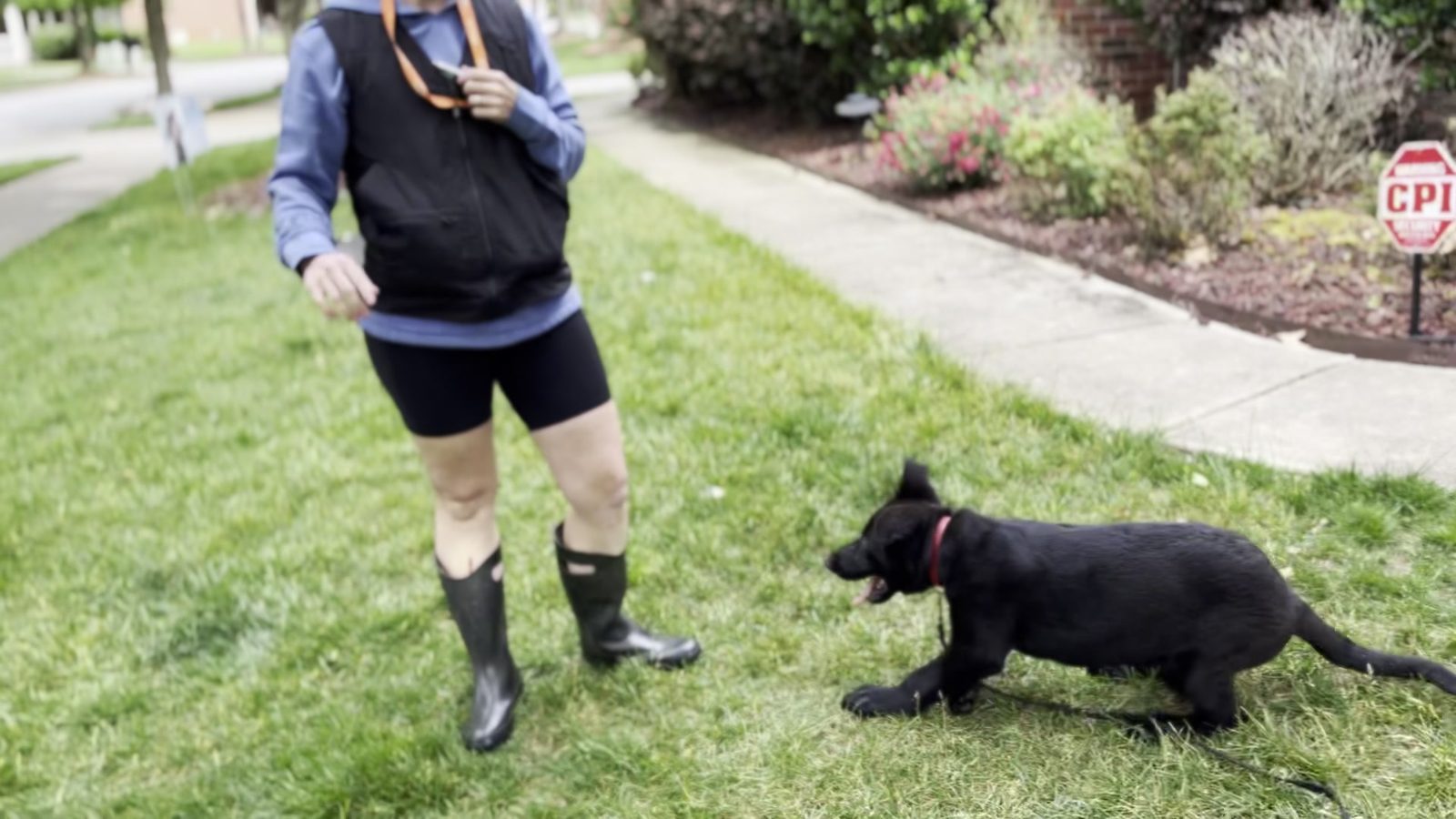
Because your puppy became an adolescent. Recall regression between roughly six and twelve months is the single most common thing we hear about, and it catches good owners completely off guard — because the recall was working.
What’s happening: your dog’s world got bigger, their confidence got bigger, hormones showed up, and the environment suddenly out-competes you in a way it didn’t at fourteen weeks. This is developmental, not personal. It ends.
| What you’re seeing | What’s actually happening | What to do |
|---|---|---|
| Comes at home, ignores you outside | The behavior never generalized | Retrain from stage 1 in each new location |
| Comes 80% of the time, then stops | Rewards became predictable and stopped mattering | Go variable, raise the reward value |
| Comes, then dodges your hand | Reaching for the collar is now a threat | Feed at your feet, condition the collar grab separately |
| Was great at 4 months, terrible at 8 | Adolescence | Back on the long line for 4–6 weeks. Don’t gamble |
| Comes for you, not for your spouse | Only one person trained it | Everyone runs charging sessions for two weeks |
The fix is almost always the same: put the long line back on, drop back two stages, and rebuild for four to six weeks. That’s not starting over. That’s maintenance. Every trainer we know does it, including us.
The 8 mistakes that break a puppy’s recall
- Calling your puppy for something they hate. Baths, nail trims, crating at the end of play, leaving the park. Go get them for those. Never whistle.
- Blowing the whistle twice. One cue, one response. Ever.
- Calling when you can’t make it happen. If you can’t back it up, don’t say it.
- Reaching over the top of your puppy’s head when they arrive. It’s the same gesture as a grab. Crouch sideways and feed low.
- Rewarding at four feet. Pay at your feet, or you’ll build a dog who orbits.
- Going off leash too early. One bad off-leash experience undoes a month.
- Training too long. Two minutes, then quit. Tired puppies learn the wrong things.
- Sounding annoyed. The whistle can’t get annoyed. That’s exactly why we use it.
If you’ve done four of these, welcome — so has everyone reading this, including us with our first dog. None of it is permanent.
Can you fix a “come” cue your dog already ignores?
Yes, and the whistle is the cleanest way to do it. In training terms, a cue your dog has learned to ignore is a poisoned cue — it’s been paired with enough neutral or unpleasant outcomes that it now predicts nothing worth moving for. You can rehabilitate a poisoned cue, but it’s slow work.
That reset is a big enough job to deserve its own guide. The full version — how to tell a poisoned cue from an untrained one, the eight things that burn it, and the six-step rebuild — is in what to do when your dog won’t come when called.
Replacing it is faster. Your dog has zero history with a whistle. There’s nothing to undo.
The three-step reset:
- Retire the old word entirely. Stop saying “come.” Not softly, not once in a while. Retire it for at least a month.
- Charge the whistle from scratch, exactly as described above, as if your dog were eight weeks old. Two weeks, no shortcuts.
- Rebuild the distance ladder from stage 1, on a long line, protecting the new cue like it’s made of glass. Because right now, it is.
This works on adult dogs too. Conditioning doesn’t care about birthdays — puppies just learn it faster because they haven’t practiced ignoring you for three years.
When can your puppy go off leash?
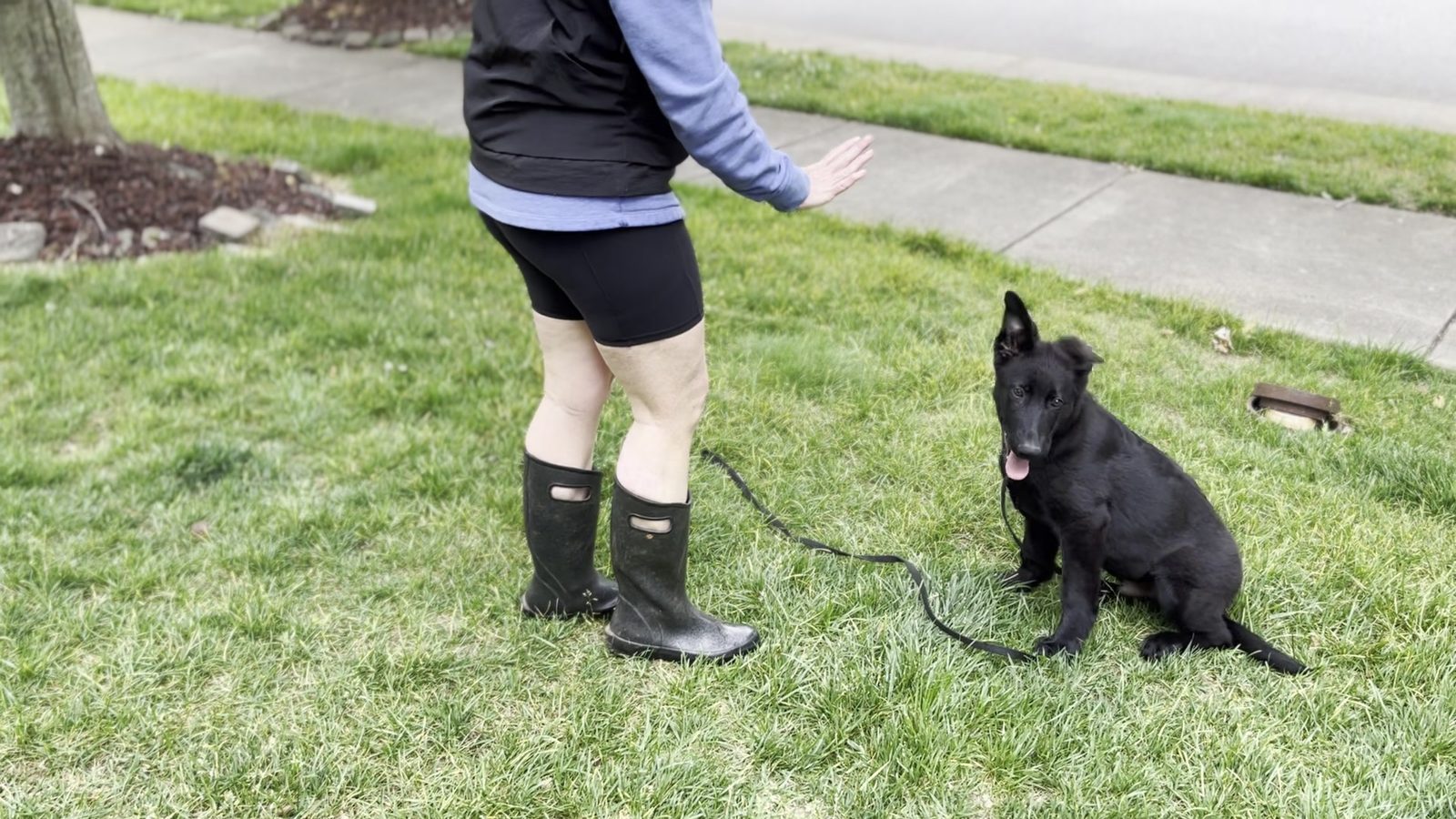
When they’ve come back on the whistle nine times out of ten, in at least five different locations, through real distractions, with a line dragging — and you’ve done it for at least two straight weeks. Not before.
The dragging-line stage is the one people skip, and it’s the most important one. Your puppy is functionally free — you’re not holding anything. But if it goes sideways you can step on the line instead of watching them disappear over a hill. That’s where a recall stops being a training exercise and becomes a real behavior.
Three honest limits worth naming:
- Never off leash near a road. There’s no recall good enough to bet on a car. None. Not ours either.
- Some breeds need longer. Huskies, hounds and high-drive working dogs have a whole extra gear when a scent hits. That’s genetics, not training failure. Budget more time.
- Adolescence means a temporary demotion. If your 8-month-old is blowing you off, the line goes back on for a few weeks. That’s not a setback, it’s the plan.
Frequently asked questions
What age should you start whistle recall training?
Eight weeks, the day your puppy comes home. There’s no minimum age for classical conditioning — a puppy who can eat can be charged to a whistle. Our demo puppy in the course was coming to the whistle across the yard at 82 days old.
How many times a day should you practice recall?
Two or three sessions of two to five minutes. Total daily training time in the first week is under ten minutes. Frequency beats duration every time with a puppy.
Can you use a clicker instead of a whistle for recall?
In this protocol they’re doing different jobs. The clicker is being used as a marker — it tells your dog which exact moment earned the reward. The whistle is being used as a cue — it tells your dog what to do. Either device can do either job. What matters is that you never make one do both. Use them together: whistle to call, marker to mark the moment they commit, food when they arrive.
Does whistle recall work on adult dogs?
Yes. Adults take longer, mostly because they’ve had more practice ignoring cues. The protocol is identical: charge, distance, distraction, variable rewards. Expect eight to twelve weeks instead of six.
What treats should you use for recall training?
Your puppy’s regular food for charging and easy reps. Save high-value food — chicken, cheese, freeze-dried liver — for hard reps and jackpots. If you use steak for everything, you have nothing left when a squirrel shows up.
What if your puppy comes but won’t let you grab their collar?
Train the collar grab as its own behavior. Touch the collar, feed. Hold the collar, feed. Hold and clip the leash, feed, then release them back to play. Ten reps a day for a week. The problem is that your hand currently predicts the end of fun.
Do dog whistles hurt a puppy’s ears?
A standard pealess training whistle blown at normal volume doesn’t hurt a dog. Don’t blow it at full force directly beside their head — the same courtesy you’d want. Train at a comfortable, repeatable volume.
Should everyone in the house use the whistle?
Yes, and this is one of the whistle’s biggest advantages. Have every person who handles your puppy run their own charging sessions for the first two weeks. A recall that only works for one person isn’t a recall — it’s a relationship.
Start today. Two minutes is enough.
You don’t need a facility, a professional, or a free weekend. You need a whistle, a handful of your puppy’s dinner, and a hallway. Twenty reps. Two minutes. Today.
Do that for a week and you’ll see the head snap. Do it for six and you’ll have a puppy who comes back — not because they decided to, but because you built the response before the decision.
Your puppy isn’t ignoring you. Your puppy is waiting for a signal worth answering. Go give them one.
You can do this.
Get the free Puppy Training Secrets library
The ebook plus 13+ training videos — setup and first week, potty training, biting and chewing, crate training, marker training, leash work, socialization, and recall. No credit card, no catch.
Send me the free ebook + videos → Free · Instant access · From former SeaWorld animal trainersKim and Zahid Buttar spent over 20 combined years as marine mammal trainers at SeaWorld, conditioning killer whales, dolphins, sea lions, walruses, belugas, otters and seals — animals you cannot leash, force, or bribe into cooperating. They now teach everyday puppy owners the same force-free, marker-based methods through Elite Puppy Training in Lake Norman, North Carolina.
 Free — no card, no catch
The ebook + 13 training videos. Free.
Puppy Training Secrets and the full video library, from former SeaWorld trainers. Biting, whining, crate, recall — handled.
Get both free →